
Arrest Warrants in Cheboygan County
Michigan law demands a proper complaint and reasonable cause before any magistrate signs a criminal warrant, and sworn testimony or affidavits can supply that cause. Cheboygan County lays out the sequence plainly. A report comes first, then an investigation, a charging decision, a warrant, an arrest, and an arraignment. The District Court handles bond and the preliminary examination on a felony. The order itself simply authorizes custody so the case can move ahead.
How a Cheboygan County Arrest Warrant Begins
Cheboygan County publishes the felony path in the order it unfolds. A felony complaint opens in the District Court, where a judge or magistrate sets bond. A preliminary examination follows. If the court finds probable cause, the case moves up to the 53rd Circuit Court. Misdemeanors stay in the District Court throughout.
Report or investigation › prosecutor review and authorization › warrant › arrest › District Court arraignment › bond and preliminary examination › bindover to Circuit Court for a felony › trial and sentence.
Not every step shows up on a public screen in Cheboygan County. A warrant can sit in an agency system before any docket entry is easy to find.
What a Cheboygan County Arrest Warrant Contains
Michigan's warrant statute spells out what the document must contain. Anyone in Cheboygan County who obtains a copy, or hears it read at arraignment, can expect those same fields.
| Substance of the accusation | The offense charged, stated so the person knows what the case is about. |
|---|---|
| Directed officer | The warrant is addressed to a peace officer, who is commanded to arrest the named person. |
| Prompt presentation | The person must be taken before a magistrate without unnecessary delay. |
| Case identifiers | The court and case number that control bond, scheduling, and recall. |
| Issuing authority | The magistrate or judge who signed it and the date it issued. |
Read the statute at MCL 764.1b and the cause requirement at MCL 764.1a.
Who May Serve Process Locally
An arrest warrant is directed to peace officers generally in Cheboygan County. Several agencies can execute one. Which one serves it depends on who holds the warrant and where the person turns up.
- Cheboygan County Sheriff's Office, 231-627-3155, for county-wide service and jail custody
- Cheboygan Department of Public Safety, 231-627-4321, for matters inside the city
- Mackinaw City Police Department, 231-436-7861, for village cases
- Tuscarora Township Police Department, 231-238-9481
- DNR law enforcement at the Indian River field office, 231-238-9313
These are routing numbers in Cheboygan County, not five separate warrant databases; the issuing court still controls the warrant record.
How Cheboygan County Arrest Warrants Are Served
Service means an officer takes you into custody on the warrant. A warrant never expires with time. It can be executed during a traffic stop, at a home, or at the jail in Cheboygan County. So the practical advice is to call the court and the sheriff before driving anywhere. The jail holds people awaiting trial and people sentenced to a year or less. The criminal division confirms that after-hours bond is accepted there. A deputy can walk you through custody and booking. A deputy cannot decide whether a warrant should be recalled, though, and only the issuing court can.
Note: The sheriff's lobby keeps 24-hour functions for permits and registrations, which is not the same as a warrant surrender counter.
Bond Is Not Dismissal
Bond buys release, not an ending. Posting it does not dismiss the charge or settle the case in Cheboygan County. The judge sets the amount and the conditions, and a third party who posts bond signs paperwork that puts the obligation in that person's name.
Caution: Ask the court whether the warrant is recalled once bond is posted, or whether an appearance is also required, and keep the receipt.
Arrest Warrant vs Summons vs Bench Warrant
Three tools, three purposes in Cheboygan County. Only one authorizes custody at the outset, and only one follows a missed obligation.
| Point | Arrest warrant | Summons | Bench warrant |
|---|---|---|---|
| What starts it | A complaint and a finding of cause | A charging decision without a custody order | A missed date, violation, or contempt |
| Effect on liberty | Authorizes arrest | Orders an appearance by notice | Authorizes arrest after the missed event |
| First step | Arraignment and bond | Appear on the date in the summons | Call the issuing court about a recall |
When Affidavit Details Are Withheld
Search warrant material and arrest warrant material are not the same thing. Michigan lets a supporting affidavit be withheld to protect an investigation, a person's privacy, or safety. Arrest warrant complaints and affidavits can carry access limits too, when they describe an ongoing investigation. A redacted copy is a normal outcome. So is a denial citing an exemption. The practical effect is simple. A requester in Cheboygan County may confirm that a warrant exists without seeing every fact behind it.
Federal and Out-of-State Warrants Are Different
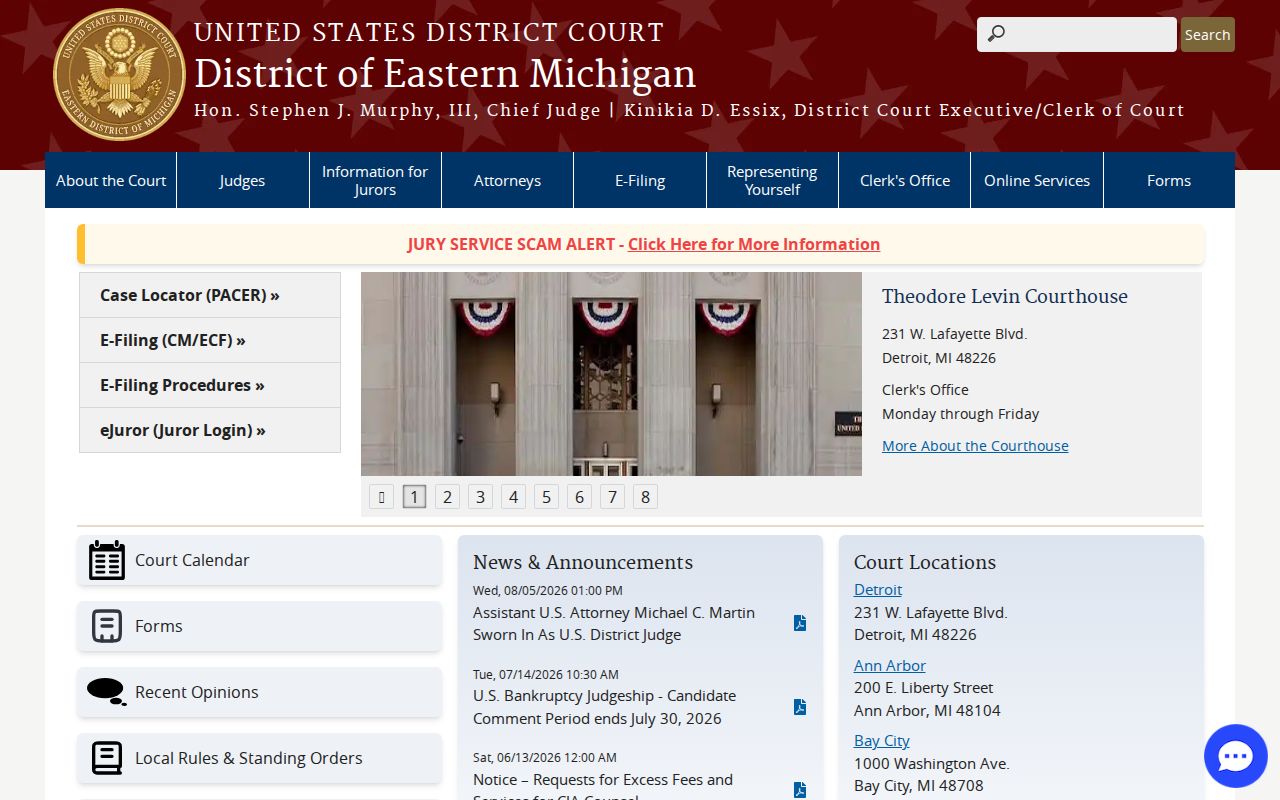
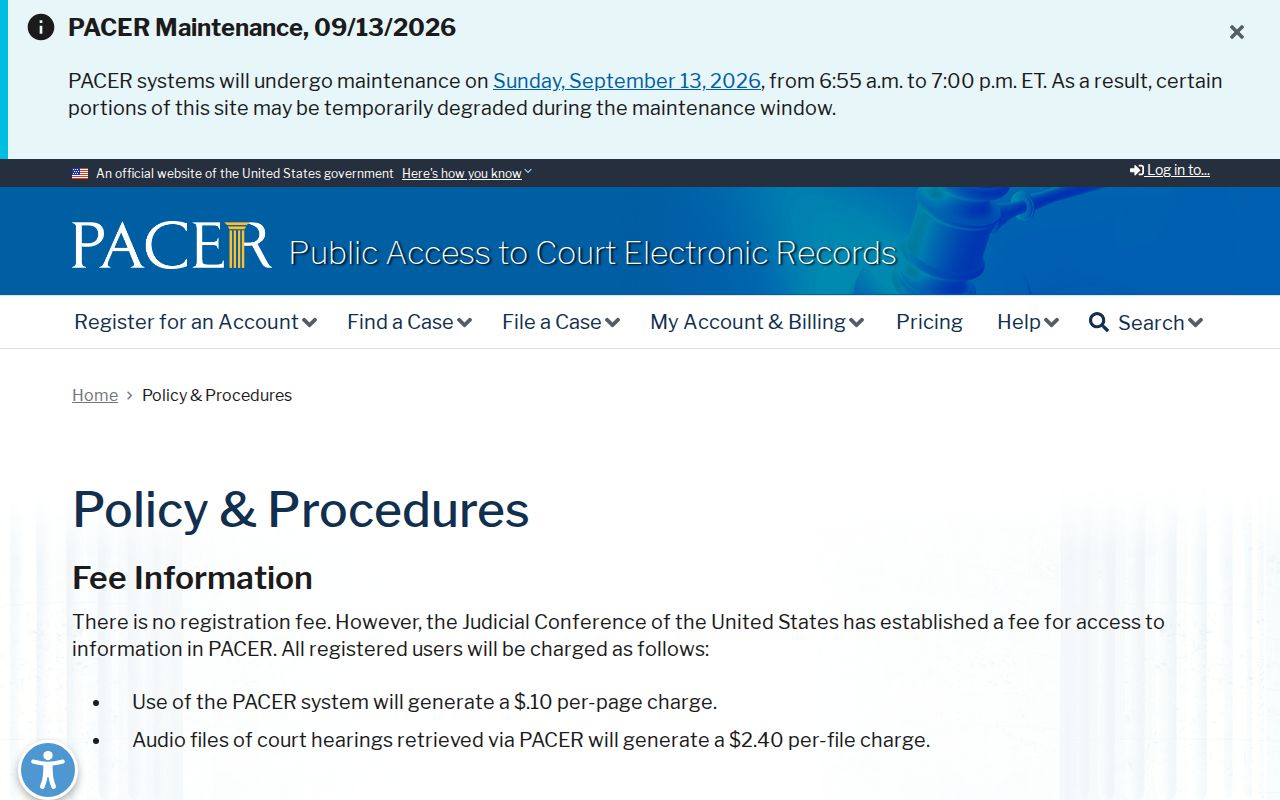
Cheboygan County sits in the Eastern District of Michigan. Federal cases do not live in the county system. Federal records are public through PACER, which requires an account and charges a per-page fee, with a waiver under a published quarterly threshold. The U.S. Marshals Service enforces federal court orders. Its regional office for this district is the contact point for service questions.
Reading a Charge on a Public Docket
Court records describe process events, not conclusions, and the words are easy to misread.
- Complaint
- The charging document that states the alleged offense and supports the request for a warrant.
- Probable cause
- Facts sufficient for a judicial officer to find a legal basis for the warrant.
- Arraignment
- The first appearance, where the charge, rights, and bond are addressed.
- Bindover
- The transfer of a felony case to Circuit Court after a finding of probable cause.
What to Do If There's a Warrant for You
Call the issuing court in Cheboygan County first. Ask whether the warrant is open, whether voluntary presentment is available, whether the court wants a motion, and what bond applies. Then talk to an attorney. That matters if the charge is serious, if probation or a support order is involved, or if the warrant might come from another state. Bond resolves custody, not the charge.
Important: Talk to a lawyer before turning yourself in. Bring the case number, ask how the warrant will be recalled, and get written confirmation afterward.